Dental Care for My British Shorthair: Bella's Gum Problems and What I Learned
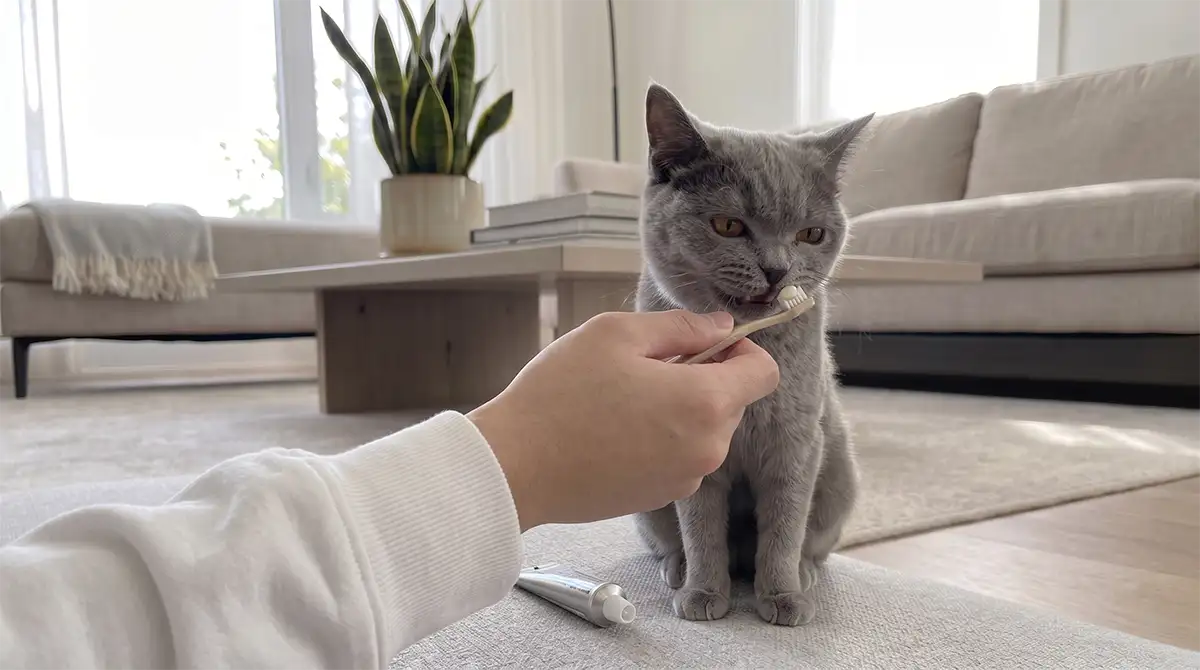
Bella was my first British Shorthair.
With her blue-grey, round face and big amber eyes, she was utterly adorable no matter how you looked at her.
But when she was around two years old, something happened that completely freaked me out. She started developing bad breath. And it kept getting worse.
At first, I thought it was the cat food. I switched to several different brands. It did not help.
Then one day, when she yawned, I leaned in for a closer look. The edges of her gums were bright red. There was a layer of yellowish-brown buildup near her back molars.
I took her to the vet for an oral examination.
I remember hearing concern about her gums, but I cannot confirm a diagnosis, severity or prognosis without the clinical record. The redness and bad breath were enough reason to have her examined.
I was completely stunned. Bella is only two years old!
What I Learned About Dental Problems
Bella’s round face does not tell me whether her teeth are crowded or how severe any dental disease is. That needs an examination.
Plaque contains bacteria and can contribute to gingivitis; mineralised plaque forms tartar. Gum disease can progress to damage around the teeth, and tooth resorption is a separate painful problem.
Cornell’s dental guide explains these distinctions. I cannot infer heart or kidney disease from Bella’s bad breath.
I then tried to build a routine Bella would tolerate without treating home care as a diagnosis or cure.
Brushing: Theoretically Effective, Practically Frustrating
Daily brushing can help prevent plaque buildup. But red or painful gums need veterinary assessment before brushing; forcing a sore mouth is not useful home care.
The problem was persuading Bella to accept a toothbrush.
I bought a soft-bristled toothbrush designed for cats and some chicken-flavoured toothpaste. During our first attempt, she sniffed the toothpaste and licked it a couple of times. I thought we were onto something.
But the moment the toothbrush touched her mouth, she flinched as if she had been electrocuted. She darted under the couch and refused to come out no matter what.
Later, I tried:
- Using a finger sleeve
- Wrapping gauze around my finger
- Sneaking up on her when she was drowsy
All failed.
The worst time: She struggled and her teeth cut my finger. I gasped in pain. She was so scared she would not come near me for three days.
The stress reaction caused by forced brushing was more of a headache than the dental problems themselves.
I gave up forcing the toothbrush. That should not mean giving up veterinary dental checks or trying to handle her mouth while she is asleep.
Alternatives I Tried: Comfort Is Not Proof of Dental Efficacy
Since Bella resisted brushing, I tried a gel, a water additive and chew toys. I cannot identify the products from this account, so these are observations of what she accepted, not product recommendations.
1. Teeth-cleaning gel
This is what I rely on the most right now.
There is no universal “rice-grain” dose. Use only a cat-appropriate product, in the amount and manner on its label and agreed with the vet.
Bella accepts the gel much better than a toothbrush. Probably because she does not have to keep her mouth open for too long. And there is no foreign object poking around in her mouth.
I once tried applying it while she dozed on my lap. I would now work with a relaxed, awake cat and stop if she resists.
I noticed less bad breath during this routine, but that does not prove the gel treated gum disease. Without its name or ingredients, I cannot assess the product. Check the VOHC list of products accepted for cats for product-specific plaque or tartar claims; acceptance is not a guarantee for every gel.
2. Water additive
I also tried a water additive. Its value depends on the particular product.
I cannot give a useful amount without knowing the product or concentration. Follow a cat-specific label and veterinary advice.
An unnamed additive cannot be assumed to work as an antibacterial mouthwash or replace dental treatment. Keep plain water available too.
Watch whether an additive changes how much the cat drinks. I did not notice Bella avoiding her water, but I did not measure her intake.
3. Dental toys
I have bought silver vine sticks and rubber dental toys with textured surfaces. Bella is not particularly interested in the silver vine sticks. But she really loves the rubber toy — probably because it is springy when she bites it.
I treat these as play items. I cannot claim they remove plaque, and they do not replace a dental examination or an evidence-based home-care plan. Supervise chewing and remove damaged toys.
Regular Dental Cleanings: An Expense You Really Can’t Skip
No matter how good your daily care routine is, some tartar can’t be brushed away or dissolved. It must be removed with professional equipment.
The vet should determine the timing of professional dental care from the individual cat’s mouth and health, not a breed-wide one-to-two-year schedule.
AAHA’s dental guidelines call for general anaesthesia with airway protection and monitoring for proper cleaning and assessment. I cannot confirm the cost of Bella’s dental visit or give a useful current quote from it.
To be honest, it hurts to shell out that much money every time. But when I look at it another way:
Leaving dental disease unchecked can mean more pain and more extensive treatment. Bella’s future treatment needs cannot be predicted from this account.
Thinking of this expense as “health insurance” helps me feel much more at peace.
When Bella had just finished her first dental cleaning, I picked her up and took her home. The anaesthesia had not fully worn off yet, and she was staggering a bit.
I noticed less bad breath later, but I cannot establish the procedure or follow-up findings without the treatment record.
At that moment, I knew the money was well spent.
Starting a Gentle Routine at Any Age
Gentle familiarisation can begin during kitten care, but there is no established ten-to-twelve-week deadline. Adult cats can learn too; pain or fear needs attention first. AAHA/AAFP guidance recommends checking the mouth before teaching home care.
Start by:
- Start with brief, rewarded touches around the lips, when the cat is relaxed and awake
- After the vet confirms the mouth is comfortable, introduce cat toothpaste and a soft brush gradually
- Stop if there is resistance, pain or bleeding; never force the mouth open
Use toothpaste intended for cats, not human toothpaste. Bella’s earlier experience does not mean it is too late to discuss a comfortable routine with her vet.
Final Thoughts
Bella accepted a gel and a rubber toy more readily than a brush. I stop when she resists, and I do not treat a better smell or a quick look at her gums as proof that her mouth is healthy. Her dental history and the products I used still need records before I can recommend a regimen.